 This review distinguishes between those two subjects:
- the limits of using a screw press to produce a dry fuel or animal-feed product; and
- the use of a modified screw press to separate pumpable organics from packaging before anaerobic digestion.
Key Takeaways
- Vincent Corporation is primarily a specialist manufacturer of industrial dewatering screw presses.
- The company’s original “Garbage” article warned that screw pressing alone cannot reduce wet mixed food waste to a stable, dry animal-feed or combustion product.
- Vincent later developed the Vincent Dewatering Compactor, or VDC, specifically for food waste, packaged goods and contaminated organic material.
- In the VDC, organics are forced through a large-aperture screen while plastics and fibrous contaminants leave as press cake.
- Upstream shredding may be used, so this should not automatically be classed as a low-impact depackaging process.
- The machine incorporates high torque, stripper bars, axial bars, resistor bars, automatic reversing and discharge-cone control to handle plastics and stringy contaminants.
- Water or steam may be introduced to improve organic recovery, potentially increasing slurry dilution and downstream hydraulic loading.
- Public information does not provide universal guarantees for organic recovery, pulp purity, reject cleanliness or reject recyclability.
Who Is Vincent Corporation?
Vincent Corporation, based in Tampa, Florida, specialises in the design and manufacture of continuous dewatering screw presses.The company traces its history to 1931 and has developed screw presses for applications including:- food-processing waste;
- fruit and vegetable residues;
- citrus peel;
- spent grain;
- manure;
- pulp and paper waste;
- plastics recycling residues;
- fish and animal-processing wastes; and
- food-waste separation.
Vincent’s Original Warning About “Garbage Millionaires”
Vincent’s historical article about pressing garbage was published as a warning to entrepreneurs who expected to convert restaurant or household waste into valuable dry animal feed or boiler fuel using a screw press alone.The company made several important technical points:- mixed food waste may contain approximately 85% to 95% moisture;
- a screw press removes free liquid but cannot remove all water bound within organic solids;
- the resulting press cake may still contain more than 80% moisture;
- further drying requires thermal energy;
- press liquor may have an extremely high suspended-solids and biochemical oxygen demand loading; and
- mixed restaurant waste may contain plastics, metals, glass, cutlery and other physical hazards.
Why the Original Article Became Outdated
Vincent’s earlier criticism focused on projects intended to manufacture dried animal feed or solid boiler fuel from mixed garbage.That is a different commercial objective from producing a pumpable organic slurry for anaerobic digestion.Vincent subsequently acknowledged that food-waste markets were changing as landfill restrictions expanded and anaerobic digestion created demand for recovered organic substrates. The company then developed modified screw presses known as Vincent Dewatering Compactors.The relevant question is therefore no longer:Can a screw press turn mixed garbage directly into dry animal feed?Instead, it is:Can a modified screw press separate sufficient organic material from packaging to produce an acceptable anaerobic digestion feedstock?What Is the Vincent Dewatering Compactor?
Vincent describes the Vincent Dewatering Compactor as a modified screw press developed for wastes, including:- residential source-separated wet waste;
- food-processing rejects;
- restaurant plate scrapings;
- expired packaged grocery products; and
- other food wastes containing plastic and fibrous contaminants.
How Does the Vincent VDC Work?
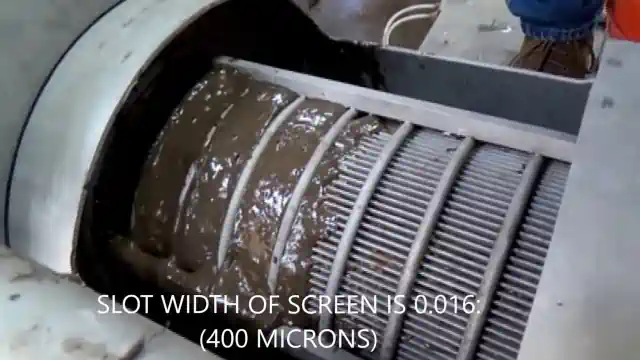
The VDC is based on the operating principles of a compression screw press.A typical process sequence appears to be:- Packaged or mixed food waste is delivered to the processing line.
- The waste may be shredded before entering the screw press.
- A continuous-flight screw conveys the material through a perforated screen cylinder.
- The screw pitch and shaft geometry progressively reduce the available volume.
- Back-pressure is applied at the discharge end.
- Soft organic material and liquid are forced through the screen apertures.
- Plastic packaging, fibres and other retained contaminants travel through the machine.
- The retained material is discharged as press cake.
How Are Packages Opened?
The public Vincent description indicates that shredders are commonly used before the VDC where packaged or bulky waste must be reduced sufficiently to enter and pass through the press.Vincent manufactures shredders designed to mount directly above the inlet of its screw presses. These use fixed blades and may discharge through a screen, comb or unrestricted opening, depending on the selected configuration.Within the VDC itself, additional mechanical actions include:- compression between the screw and screen;
- shearing against stripper bars;
- interaction with axial and resistor bars;
- material mixing and agitation;
- automatic screw reversal; and
- back-pressure at the discharge cone.
Special Features of the Vincent VDC
Vincent identifies several modifications intended to help the press handle mixed food waste and troublesome packaging.High-torque drive
The VDC uses a larger motor and gearbox than would normally be required for easily dewatered food-processing residues.Automatic screw reversing
A variable-frequency drive can periodically reverse the screw to clear accumulations and material that has become caught around internal components.Stripper bars
Vertical and horizontal stripper bars in the inlet hopper strip, break and shear plastics and fibrous accumulations.Axial screen bars
Axial bars run along the screen and help prevent plastic and stringy material from wrapping around the screw shaft.Continuous-flight screw
Vincent states that the screw configuration permits large packaging items and tramp material to travel through the press towards the discharge.Controlled back-pressure
Air cylinders control the discharge cone. Increasing resistance at the cone increases compression, while opening the cone allows accumulated packages and contaminants to leave the machine.Automatic cone operation
The cone may be opened periodically or in response to increased motor current to release accumulated material and reduce blockage risk.Split screens
Hinged split screens are intended to simplify inspection and cleaning of the press interior.Water or steam injection
Drilled resistor bars can introduce water or steam to improve the recovery of organic material from packaging.Is the VDC a Low-Impact Depackager?
It would be difficult to classify the Vincent VDC as a genuinely low-impact depackaging machine where upstream shredding is used.Shredding packages before separation may:- reduce packaging particle size;
- create more fragments;
- increase the surface area of plastic exposed to abrasion;
- make reject sorting more difficult; and
- increase the risk that small packaging fragments pass through the separation screen.
- robust handling of mixed waste;
- high-torque compression;
- organic extraction;
- resistance to wrapping and blockages; and
- production of an organic fraction suitable for further processing.
Organic Recovery Versus Slurry Purity
For any extrusion or screw-press depackager, buyers should distinguish between:- organic recovery: the proportion of available food forced through the screen;
- organic loss: the amount of food discharged with the press cake;
- slurry purity: the concentration of physical contaminants in the recovered organic fraction; and
- reject quality: the cleanliness, dryness and particle size of the discharged packaging.
Does Adding Water Improve the Process?
Vincent indicates that water or steam may be introduced through drilled resistor bars to improve organic recovery.Water can wash residual food from packaging and help organic material pass through the screen. However, it may also:- dilute the recovered slurry;
- consume digester hydraulic capacity;
- increase pumping requirements;
- increase heating demand;
- increase digestate production; and
- create additional wastewater-management requirements.
- water addition;
- output dry-solids content;
- organic dry matter recovered;
- contaminant concentration; and
- reject moisture and organic content.
What Happens to the Reject Stream?
Vincent describes the discharged press cake as consisting mainly of plastic and fibrous trash.Public information does not establish that this material will be sufficiently clean or dry for conventional recycling.The reject may contain:- shredded plastic film;
- rigid plastic fragments;
- paper and cardboard fibres;
- mesh and string;
- food residue;
- water; and
- other mixed contaminants.
- further washing and sorting;
- RDF or SRF production;
- energy-from-waste incineration;
- additional mechanical processing; or
- disposal.
Potential Advantages
Experienced screw-press manufacturer
Vincent Corporation has extensive experience in continuous screw pressing and food-processing residues.Detailed practical engineering
The VDC includes numerous design features developed specifically to handle plastic film, fibrous waste, bags, containers and tramp material.Ability to process difficult mixed wastes
High torque, automatic reversing and controlled cone operation may help the machine process variable and troublesome waste streams.Feedstock testing and rental equipment
Vincent maintains laboratory, pilot and rental presses. Testing waste in a representative machine before purchase is a significant advantage.Potential AD feedstock production
The recovered organic emulsion may be suitable for anaerobic digestion, subject to contaminant, solids-content and process-compatibility testing.Potential Limitations
- Upstream shredding may create small plastic fragments.
- The press applies substantial compression, shearing and abrasion.
- Water addition may be needed to improve organic recovery.
- The recovered organic fraction may require further screening or contaminant removal.
- The press cake may remain wet and contaminated.
- Reject recyclability is not established by the manufacturer’s general information.
- Performance is highly dependent on waste composition and screen selection.
- The machine cannot be expected to produce a dry animal-feed or boiler-fuel product without further thermal treatment.
Questions to Ask Before Buying a Vincent VDC
- Which Vincent press model and configuration is recommended for the proposed waste?
- Is upstream shredding required?
- What shredder type and discharge aperture will be used?
- What packaging particle-size distribution will be produced?
- What screen aperture is proposed for the screw press?
- What throughput is guaranteed for representative feedstock?
- What organic recovery is guaranteed?
- What contaminant concentration is guaranteed in the recovered slurry?
- How much organic material remains in the press cake?
- How much water or steam is added per tonne?
- What dry-solids concentration is achieved in the organic output?
- What is the moisture content of the reject?
- Can the reject be recycled, or is it intended for RDF, SRF, incineration or disposal?
- What additional screening, grit removal or plastics removal is required?
- What power consumption is expected per tonne?
- How often does the screw reverse during normal operation?
- Which internal parts are subject to abrasive wear?
- How frequently must the screen, bars and screw be cleaned?
- What feedstock trial will be completed before contract award?
- Will recovery, purity, water consumption and reject quality be included in the acceptance test?
Independent Assessment
The Vincent VDC is better understood as a robust, purpose-modified food-waste screw press than as a conventional filter press or a simple garbage dewatering machine.Vincent’s original scepticism about producing animal feed or boiler fuel from mixed garbage was technically justified. A screw press can remove free liquid, but it cannot economically replace the thermal drying needed to produce a low-moisture, stable product.That does not invalidate the later use of screw pressing to prepare an organic slurry for anaerobic digestion. The commercial objective is different: the output does not need to be dry, but it does need to be pumpable, biodegradable and sufficiently free from physical contaminants.The VDC appears engineered to tolerate difficult feedstocks through:- high torque;
- automatic reversing;
- stripper and resistor bars;
- controlled discharge pressure;
- large cone travel; and
- accessible split screens.
- plastic fragment production;
- organic recovery;
- slurry purity;
- water consumption;
- output dry-solids concentration;
- reject cleanliness and moisture;
- wear and maintenance requirements; and
- the availability of a viable reject outlet.
Frequently Asked Questions
Is the Vincent VDC a food waste depackager?
Yes. Vincent describes the VDC as a modified screw press that forces organic material through a screen while plastics and fibrous contaminants discharge from the end.Is it just a dewatering screw press?
It is based on screw-press technology, but its purpose-modified features allow it to perform separation as well as dewatering and compression.Does the Vincent VDC open packaged food?
Packaged waste may be shredded before entering the press. Within the VDC, compression, stripper bars, resistor bars and internal shearing further release organic material from packaging.Can it produce dry animal feed?
Not by screw pressing alone. Vincent explains that pressed food-waste cake may still contain more than 80% moisture. Producing stable dry feed requires further processing and thermal drying.Can the recovered organics be sent to anaerobic digestion?
That is one of the principal uses described by Vincent. Suitability depends on physical contamination, dry-solids content, feedstock composition and the requirements of the receiving digester.Is the discharged plastic recyclable?
Not necessarily. The reject may be shredded, mixed, wet and contaminated. Its destination should be established through testing and consultation with an identified recycling or energy-recovery outlet.Does the VDC use added water?
Vincent states that drilled resistor bars may introduce water or steam to improve organic recovery. The amount required should be measured during trials.Is the Vincent VDC a low-impact depackager?
It would be difficult to describe it as low impact where packages are shredded and then subjected to compression, shearing and extrusion. Buyers concerned about microplastic generation should require particle-size and contamination testing.Sources
- Vincent Corporation: Garbage — Animal Feed and Biofuel.
- Vincent Corporation: Repurposing Food Waste and the Vincent Dewatering Compactor.
- Vincent Corporation: Screw Press Description.
- Vincent Corporation: Shredders for Screw Press Applications.
- Vincent Corporation: Screw Press and Shredder Product Range.
- Vincent Corporation: Company History and Markets.
Discover more from IPPTS Depackaging Equipment Insights
Subscribe to get the latest posts sent to your email.