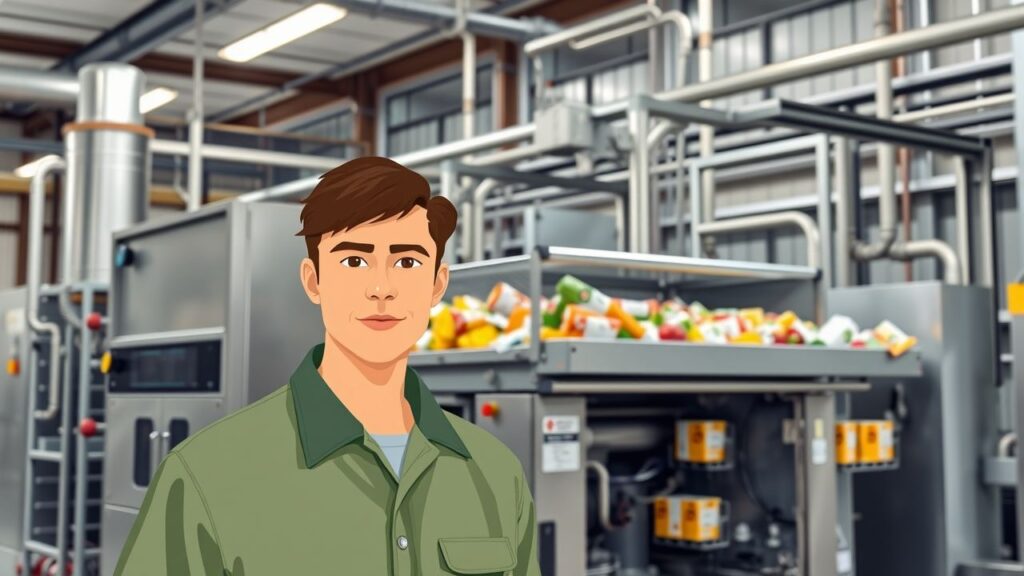
Food waste depackaging equipment is moving from a specialist preprocessing option to a major part of the United States organics-recycling infrastructure. Anaerobic digestion plants, composting facilities and stand-alone preprocessing centres are increasingly accepting packaged products, contaminated food residuals and rejected retail stock that would previously have been sent to landfill or incineration.
The commercial drivers are strong. A depackaging line can expand the range and volume of material accepted by a facility, increase tipping-fee income and, at anaerobic digestion plants, increase biogas production. It can also reduce the labour and training burden placed on supermarkets, food manufacturers, distribution centres and institutional kitchens.
But the concern is that regulation has not developed at the same rate. Some states treat a depackager as a solid-waste processing or transfer facility. Others regulate it as part of a composting or anaerobic digestion permit. A few classify stand-alone operations as materials recovery or organics-preprocessing facilities. In many states, there is no rule written specifically for food waste depackaging, but that does not mean the operation is unregulated.
This guide explains the growth of the market, the principal equipment and product-quality issues, and the regulatory position identified in every state. It is a regulatory screening resource rather than legal advice. Project developers should obtain written confirmation from the responsible state and local agencies before selecting a site, purchasing equipment or accepting feedstock.
Key takeaways
- Food waste depackaging is growing because it allows organics facilities to accept packaged and contaminated loads while generators avoid manual unwrapping.
- State regulation is fragmented. The same operation may be treated as solid-waste processing, transfer, materials recovery, organics preprocessing or part of a host composting or AD permit.
- California and New York have comparatively clear physical-contamination limits affecting compost or digestate. Indiana and Pennsylvania provide examples of permit-specific controls.
- Several states, including Maryland, Michigan, North Carolina, Pennsylvania, Vermont and Washington, have been developing or reconsidering relevant rules or permit approaches.
- No nationally standardised, inexpensive regulator-ready method yet exists for measuring microplastics in depackaged food slurry, compost and digestate.
- Equipment selection should consider purity, packaging fragmentation, reject dryness, water demand, sampling access and downstream product quality—not recovery percentage alone.
Why depackaging equipment use is growing
Three connected commercial forces are accelerating adoption. First, processors gain access to larger volumes of feedstock and associated gate or tipping fees. Anaerobic digestion operators may also gain additional renewable natural gas, electricity or heat revenue when more biodegradable material enters the digester.
Second, waste generators can divert products without paying staff to open containers, drain bottles or remove food from wrappers. This is particularly important for mixed retail returns, date-expired inventory, damaged products and production rejects.
Third, food-waste diversion laws, corporate zero-waste commitments and methane-reduction policies are increasing demand for outlets capable of accepting difficult packaged loads. Integrated service providers can now combine collection, depackaging and final processing, making the route simpler for national retailers and food businesses.
US EPA surveys of anaerobic digestion facilities also show the commercial importance of tipping fees and preprocessing. EPA cautions that its reported processing totals underestimate the national market because not every operating facility responds to the survey.
What food waste depackaging equipment does
A depackager separates the organic contents of packaged food and beverages from plastic, paper, metal, glass and other packaging. Available systems use different combinations of impact, shearing, paddles, pressure, screening, washing, flotation and conveying.
The two most frequently quoted performance measures are recovery and purity. Recovery is the proportion of available food captured in the organic fraction. Purity is the proportion of that recovered fraction that is actually food rather than packaging or other unwanted material.
A high recovery figure does not by itself prove that a system is producing a suitable feedstock. A machine may recover a large proportion of the food while also fragmenting packaging into particles capable of passing through the screen. Purchasers should therefore examine recovery and purity together with reject dryness, packaging integrity, water use, energy demand, screen size, maintenance requirements and the intended use of digestate or compost.
Why regulation is difficult
Depackaging sits between waste generation and final recycling. The preprocessing facility may separate the food, but a different company may digest or compost it, and another party may apply the resulting product to land. This creates a regulatory accountability question: who is responsible when packaging fragments are present in slurry, digestate or compost?
Most existing rules were written for transfer stations, materials recovery facilities, composting plants, anaerobic digesters or land application—not for modern stand-alone depackaging networks. Regulators therefore adapt established permit categories.
The absence of a standard microplastics method adds a second difficulty. Visible contamination and larger particles can be screened or weighed, but smaller plastic particles in complex organic matrices are slow and expensive to identify. ASTM is developing guidance relevant to microparticles, but the work item is not a complete national test standard for depackaged food slurry, compost or digestate.
How states currently regulate depackaging
The principal approaches identified in this review are:
- a stand-alone solid-waste processing or transfer facility permit;
- classification as a materials recovery or recycling facility;
- treatment as an organics preprocessing or designated organics recycling facility;
- incorporation into the existing permit for a composting or anaerobic digestion plant;
- permit-specific sampling, visible-contamination or recordkeeping conditions;
- notification rather than a full dedicated permit; or
- reliance on general solid-waste, water, air, agricultural and local controls where no depackaging-specific rule exists.
Facility location can change the answer. Equipment at a farm digester, wastewater treatment works, compost site or transfer station may be regulated differently from an independent depackaging centre receiving loads from multiple generators.
Microplastics, visible contamination and product quality
Mechanical preprocessing can create smaller packaging fragments, especially when brittle plastics are exposed to high impact or repeated grinding. However, the quantity produced by different machine designs is not yet supported by a sufficiently large body of publicly available, independent comparative testing.
Current state controls therefore tend to focus on visible foreign matter, percentage contamination by dry weight, particles above a specified size, or permit-specific screening. These approaches can reduce obvious contamination but do not necessarily capture the full microplastics range, commonly defined as particles smaller than 5 mm.
Until more standardised testing is available, operators should maintain incoming-load records, mass balances, reject weights, screen specifications, inspection records and representative samples. Contracts should define acceptable incoming contamination and the quality required by the receiving digester, composter or land-application outlet.
Equipment selection under emerging regulation
A prudent purchaser should assume that contamination controls will become tighter during the operating life of the equipment. Specifications should therefore require evidence on both separation performance and environmental quality.
The tender should request independent or witnessed tests using representative feedstocks; recovery and purity calculations with a disclosed methodology; reject moisture and organic-loss data; packaging particle-size information; water and energy consumption; sampling points; liquid containment; cleaning procedures; and guarantees linked to defined test conditions.
Systems that preserve packaging in larger, cleaner pieces may offer advantages where rejects are destined for recycling or solid recovered fuel. By contrast, systems that heavily shred or mill packaging may make downstream separation more difficult. The correct choice depends on feedstock, outlet requirements and the applicable permit, but claims of very high purity should not be accepted without a reproducible test method.
Questions to ask regulators and suppliers
Before committing to a project, establish:
1. Which agency and permit category apply to the depackaging activity?
2. Is the unit covered by the host facility permit or does it need a separate approval?
3. Which packaged and unpackaged feedstocks may be accepted?
4. Are liquids, wash water and spills fully contained?
5. What sampling and analytical methods will be accepted?
6. Are there limits for physical contamination in slurry, digestate or compost?
7. Can the resulting digestate or compost be land applied, sold or distributed?
8. Who is responsible if the downstream processor rejects a contaminated load?
9. What records and annual tonnage reports are required?
10. Could proposed or draft rules alter the equipment specification?
States with significant or developing requirements
The following states have a distinctive classification, product-quality standard, permit practice or active rule development identified in the principal BioCycle/NRDC research or official state material.
California
Regulatory position: Established, significant controls affecting depackaging outputs
Likely route: Depackaging may be regulated within transfer/processing, composting or AD permitting. Land application of compostable material or digestate is regulated
Contamination or product requirement: Compost/digestate physical contamination limit of 0.5% by dry weight; rules include particle-size and film-plastic provisions
Diversion context: Statewide organic-waste collection and diversion requirements under SB 1383 drive processing demand
Evidence status: Confirmed
Connecticut
Regulatory position: Depackaging generally treated through processing/transfer or host-facility permitting
Likely route: Solid-waste facility permit or inclusion in composting/AD permit; regulator may add permit-specific testing conditions
Contamination or product requirement: No universal depackaged-slurry limit identified; DEEP may impose additional testing through permits
Diversion context: Commercial organics recycling law applies to qualifying generators subject to thresholds and capacity conditions
Evidence status: Confirmed
Illinois
Regulatory position: Depackaging that constitutes storage, transfer or treatment of solid waste may be a Pollution Control Facility
Likely route: Solid-waste permit and local siting approval may be required, depending on the operation and exemptions
Contamination or product requirement: No specific statewide depackaged-slurry microplastics limit identified
Diversion context: No statewide commercial food-waste recycling mandate identified
Evidence status: Confirmed
Indiana
Regulatory position: Specific permit practice reported for depackaging and slurry sampling
Likely route: Solid-waste processing facilities are regulated under 329 IAC 11; biomass digesters have requirements under 329 IAC 11.5
Contamination or product requirement: Permit holders may be required to sample slurry and document technically supported methods; one reported permit uses a 2.83 mm No. 7 sieve method
Diversion context: No statewide commercial food-waste diversion mandate identified
Evidence status: Confirmed
Maryland
Regulatory position: Regulations affecting depackaging were reported as being drafted or revised
Likely route: Generally treated as a processing or transfer operation or added to a host composting/AD permit
Contamination or product requirement: No final depackaged-slurry microplastics limit identified in the reviewed material
Diversion context: State organics recycling law applies to qualifying large food-residual generators subject to conditions
Evidence status: Confirmed – developing
Michigan
Regulatory position: Depackaging has been described as a materials-recovery activity; revised rules/permit language were reported in development
Likely route: Recycling or solid-waste processing permit; anticipated provisions include containment of liquids from depackaging
Contamination or product requirement: No final statewide depackaged-slurry limit identified
Diversion context: Statewide food-waste reduction goals, but no broad disposal ban confirmed in this screening
Evidence status: Confirmed – developing
New Hampshire
Regulatory position: Depackaging generally considered a processing or transfer activity rather than final organics recycling
Likely route: Solid-waste facility permit or inclusion in host-facility approval
Contamination or product requirement: No specific statewide depackaged-slurry limit identified in reviewed material
Diversion context: No broad statewide commercial food-waste diversion mandate identified
Evidence status: Confirmed
New Jersey
Regulatory position: Depackaging may be classified as a materials recovery facility or regulated within host-facility approvals
Likely route: Solid-waste facility approval and applicable recycling, composting or AD permits
Contamination or product requirement: No specific statewide depackaged-slurry microplastics limit identified
Diversion context: State food-waste recycling law applies to qualifying large generators subject to distance/capacity conditions
Evidence status: Confirmed
New York
Regulatory position: Established organics facility and end-product controls; depackagers can be intermediary facilities
Likely route: Part 360/361 solid-waste regulations; intermediary facilities can count for generator proximity under the food-scraps law
Contamination or product requirement: Digestate may not contain more than 0.5% physical contaminants greater than 4 mm; additional film-plastic provision applies
Diversion context: Food Donation and Food Scraps Recycling Law expands; distance rises to 50 miles and threshold changes take effect in 2027/2029
Evidence status: Confirmed
North Carolina
Regulatory position: Notification system was reported in development, with future rule review likely to consider permitting
Likely route: Co-located depackagers fall under composting or AD facility permits; standalone status should be confirmed with DEQ
Contamination or product requirement: No specific statewide depackaged-slurry limit identified
Diversion context: No statewide commercial food-waste diversion mandate identified
Evidence status: Confirmed – developing
Ohio
Regulatory position: Distinctive classification and exemption pathway reported
Likely route: Within a permitted composting footprint, depackaging is part of feedstock receiving and subject to compost rules; outside it, some operations may qualify as legitimate recycling if statutory criteria are met
Contamination or product requirement: No specific statewide depackaged-slurry limit identified in reviewed material
Diversion context: No statewide commercial food-waste diversion mandate identified
Evidence status: Confirmed
Pennsylvania
Regulatory position: Specific permit conditions reported for on-farm AD with depackaging; broader rules were reported under development
Likely route: Residual-waste/general permit or facility-specific approval; General Permit WMGM042 is relevant to manure and food-waste AD
Contamination or product requirement: Reported permit condition: no visible plastics in digestate used on land or as animal bedding, and no visible plastics on the application area
Diversion context: No statewide commercial food-waste diversion mandate identified
Evidence status: Confirmed – developing
Vermont
Regulatory position: Depackaging is treated as a designated organics recycling activity; additional feedstock restrictions and guidance were reported in development
Likely route: Solid-waste certification/approval; draft revisions distinguish source-separated and packaged food residuals
Contamination or product requirement: Regulatory emphasis is on controlling incoming contamination; no standardized microplastics test was adopted in the reviewed material
Diversion context: Universal Recycling Law drives food-scrap diversion; forthcoming guidance was expected to discourage sending clean source-separated material through depackagers
Evidence status: Confirmed – developing
Washington
Regulatory position: Specific organics-preprocessing rules were reported in development
Likely route: Draft approach classifies depackagers as organics preprocessing facilities preparing material for composting, AD or other transformative processing
Contamination or product requirement: Draft reported limit: no more than 4% contamination by volume in incoming source-separated organics, applied to material exiting a depackager; likely visual assessment
Diversion context: Business organics-management requirements expand from 1 January 2026 where service and capacity conditions are met
Evidence status: Confirmed – developing
Food waste depackaging regulatory position in all 50 states
| State | Position | Likely regulatory route |
|---|---|---|
| Alabama | No depackaging-specific statewide rule identified | General solid-waste processing, transfer, composting or AD permitting; air and water approvals may also apply |
| Alaska | No depackaging-specific statewide rule identified | General solid-waste treatment or processing approval; local requirements may be important |
| Arizona | No depackaging-specific statewide rule identified | General solid-waste facility, composting, aquifer-protection and air-quality requirements |
| Arkansas | No depackaging-specific statewide rule identified | General solid-waste processing or composting permit; water and air requirements may apply |
| California | Established, significant controls affecting depackaging outputs | Depackaging may be regulated within transfer/processing, composting or AD permitting. Land application of compostable material or digestate is regulated |
| Colorado | Depackagers operate, but no dedicated depackager permit structure was reported in the BioCycle/NRDC survey | Existing solid-waste processing, transfer, composting or AD approvals are applied case by case |
| Connecticut | Depackaging generally treated through processing/transfer or host-facility permitting | Solid-waste facility permit or inclusion in composting/AD permit; regulator may add permit-specific testing conditions |
| Delaware | No depackaging-specific statewide rule identified | General solid-waste facility approval, composting requirements and discharge controls |
| Florida | No response was received in the BioCycle/NRDC survey; no specific statewide depackaging rule confirmed in this screening | General solid-waste processing, transfer, composting and environmental-resource permitting |
| Georgia | No depackaging-specific statewide rule identified | General solid-waste handling, processing or composting permit; water and air approvals as applicable |
| Hawaii | No depackaging-specific statewide rule identified | General solid-waste management permit with county-level collection and siting requirements |
| Idaho | No depackaging-specific statewide rule identified | General solid-waste processing, composting, wastewater and agricultural requirements |
| Illinois | Depackaging that constitutes storage, transfer or treatment of solid waste may be a Pollution Control Facility | Solid-waste permit and local siting approval may be required, depending on the operation and exemptions |
| Indiana | Specific permit practice reported for depackaging and slurry sampling | Solid-waste processing facilities are regulated under 329 IAC 11; biomass digesters have requirements under 329 IAC 11.5 |
| Iowa | Depackagers operate, but no dedicated depackager permitting structure was reported | Existing solid-waste, composting or AD approvals are applied |
| Kansas | No depackaging-specific statewide rule identified | General solid-waste processing, composting and water-quality approvals |
| Kentucky | No depackaging-specific statewide rule identified | General solid-waste processing, composting and environmental permits |
| Louisiana | No depackaging-specific statewide rule identified | General solid-waste processing, transfer, composting, discharge and air permits |
| Maine | No standalone depackager rule identified in this screening | Solid-waste processing or composting approval; Maine food-waste policy may affect project economics |
| Maryland | Regulations affecting depackaging were reported as being drafted or revised | Generally treated as a processing or transfer operation or added to a host composting/AD permit |
| Massachusetts | No depackaging-specific statewide rule identified, but organics processing is actively regulated | Site assignment/solid-waste or recycling approval, composting or AD approval; disposal-ban compliance drives feedstock |
| Michigan | Depackaging has been described as a materials-recovery activity; revised rules/permit language were reported in development | Recycling or solid-waste processing permit; anticipated provisions include containment of liquids from depackaging |
| Minnesota | Depackagers operate, but no dedicated depackager permitting structure was reported | Host-facility solid-waste, composting or AD permitting generally applies |
| Mississippi | No depackaging-specific statewide rule identified | General solid-waste processing, composting, water and air approvals |
| Missouri | No depackaging-specific statewide rule identified | General solid-waste processing, composting and water-quality approvals |
| Montana | No depackaging-specific statewide rule identified | General solid-waste management system licensing and composting requirements |
| Nebraska | No depackaging-specific statewide rule identified | General solid-waste processing, composting and agricultural/environmental approvals |
| Nevada | No depackaging-specific statewide rule identified | General solid-waste management facility approval; local health-district requirements may apply |
| New Hampshire | Depackaging generally considered a processing or transfer activity rather than final organics recycling | Solid-waste facility permit or inclusion in host-facility approval |
| New Jersey | Depackaging may be classified as a materials recovery facility or regulated within host-facility approvals | Solid-waste facility approval and applicable recycling, composting or AD permits |
| New Mexico | No dedicated statewide depackager rule identified; commercial deployment is growing | General solid-waste processing, composting or host-facility permit |
| New York | Established organics facility and end-product controls; depackagers can be intermediary facilities | Part 360/361 solid-waste regulations; intermediary facilities can count for generator proximity under the food-scraps law |
| North Carolina | Notification system was reported in development, with future rule review likely to consider permitting | Co-located depackagers fall under composting or AD facility permits; standalone status should be confirmed with DEQ |
| North Dakota | No depackaging-specific statewide rule identified | General solid-waste management, composting and water-quality approval |
| Ohio | Distinctive classification and exemption pathway reported | Within a permitted composting footprint, depackaging is part of feedstock receiving and subject to compost rules; outside it, some operations may qualify as legitimate recycling if statutory criteria are met |
| Oklahoma | No depackaging-specific statewide rule identified | General solid-waste processing, composting and discharge approvals |
| Oregon | No standalone depackager rule identified in this screening; organics processing is regulated | Solid-waste treatment/composting permit or host-facility approval; local Metro requirements may be significant |
| Pennsylvania | Specific permit conditions reported for on-farm AD with depackaging; broader rules were reported under development | Residual-waste/general permit or facility-specific approval; General Permit WMGM042 is relevant to manure and food-waste AD |
| Rhode Island | No depackager-specific permit class identified; compost product standards are relevant | General solid-waste, composting or AD approval |
| South Carolina | No depackaging-specific statewide rule identified | General solid-waste processing, composting, wastewater and air approvals |
| South Dakota | No depackaging-specific statewide rule identified | General solid-waste management, composting and water-quality approval |
| Tennessee | No depackaging-specific statewide rule identified | General solid-waste processing, composting and environmental permits |
| Texas | No depackaging-specific statewide rule identified | General municipal solid-waste processing, transfer, composting and water/air authorization |
| Utah | No depackaging-specific statewide rule identified | General solid-waste facility, composting and water-quality approvals |
| Vermont | Depackaging is treated as a designated organics recycling activity; additional feedstock restrictions and guidance were reported in development | Solid-waste certification/approval; draft revisions distinguish source-separated and packaged food residuals |
| Virginia | No depackaging-specific statewide rule identified | General solid-waste treatment, composting, transfer or host-facility approval |
| Washington | Specific organics-preprocessing rules were reported in development | Draft approach classifies depackagers as organics preprocessing facilities preparing material for composting, AD or other transformative processing |
| West Virginia | No depackaging-specific statewide rule identified | General solid-waste facility, transfer, composting and water-quality approval |
| Wisconsin | No depackaging-specific statewide rule identified | General solid-waste processing, composting, wastewater and agricultural approvals |
| Wyoming | No depackaging-specific statewide rule identified | General solid-waste treatment, transfer, composting and water-quality approval |
Coming Soon! – Download our detailed 50-state regulatory register
The companion Excel workbook includes the regulatory position, likely permit route, contamination provisions, diversion context, official state source, research source, evidence-confidence rating and date checked for every state. A CSV version is also included for database use.
Coming Soon on Gumroad: Download the guide free of charge, or enter any amount you consider reasonable to support future updates and independent research.
Conclusion
Food waste depackaging will continue to expand because it solves a genuine collection and processing problem. It enables large quantities of packaged food to be diverted and can improve the economics of anaerobic digestion and composting. But expansion without reliable product-quality evidence risks transferring contamination from packaging into slurry, digestate, compost and ultimately soil.
The most credible path is not to reject depackaging by machines as a concept, nor to assume that every machine performs equally.
Regulators and purchasers need transparent mass balances, representative testing, clear permit responsibility and equipment selected to minimise packaging fragmentation.
Source separation should remain the preferred option for material that can reasonably be kept clean, while depackaging should be used as a controlled preprocessing method, for out-of-specification packaged or contaminated streams.
Sources and disclaimer
- BioCycle/NRDC: Depackaging Is Scaling Fast And Regulation Isn’t Keeping Up
- US EPA: Anaerobic Digestion Facilities Processing Food Waste in the US, 2022 and 2023
- US EPA: Permitting and Regulations for Anaerobic Digesters
- ASTM Work Item WK94491
Regulatory disclaimer: This publication is an informational screening guide and is not legal, engineering or permitting advice. Regulations, agency interpretations and permit conditions change. Confirm all requirements with the responsible state and local agencies and obtain professional advice before relying on the information for a project.
Suggested citation: Last, S. (2026). US Food Waste Depackaging Equipment and Regulations: 50-State Guide and Regulatory Register. DepackagingEquipment.com. Information checked 2 July 2026.
Discover more from IPPTS Depackaging Equipment Insights
Subscribe to get the latest posts sent to your email.