Key Takeaways
- SIEDON is a Chinese manufacturer of industrial shredders, waste balers, compactors, food-waste depackagers and organic-waste treatment systems.
- The company offers dedicated food-waste depackaging equipment.
- The DK-series organic separator combines crushing, hammering, centrifugal force, airflow and screening.
- SIEDON’s complete food-waste systems may use a twin-shaft shredder before the depackaging machine.
- The company also offers an integrated machine combining crushing, depackaging and screw-press dewatering.
- These systems are mechanically intensive and may fragment plastic, paper, composite packaging and other contaminants.
- SIEDON does not publish sufficient independent data to establish universal organic recovery, pulp purity, microplastic generation or reject recyclability.
- Representative trials should measure recovery, contamination, added water, energy use and packaging particle size.
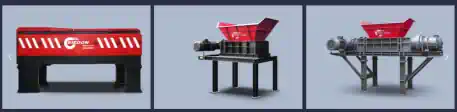
Who Is SIEDON Technologies?
SIEDON Technologies is a China-based supplier of recycling and waste-processing machinery.The company markets equipment including:- single-shaft industrial shredders;
- twin-shaft shredders;
- four-shaft shredders;
- food-waste depackaging machines;
- organic-waste separators;
- dewatering screw presses;
- waste balers;
- EPS foam compactors;
- RDF and SRF preparation systems;
- bulky-waste processing lines; and
- complete kitchen and food-waste treatment systems.
Does SIEDON Manufacture Food Waste Depackaging Machines?
Yes. The original version of this article stated that SIEDON appeared to offer only shredder-based systems. That is no longer accurate.SIEDON currently advertises:- a DK-series waste depackager and organic separator;
- a food-waste depackaging machine;
- an organic-waste depackaging and separation system;
- a food-waste shredding and dewatering system; and
- an integrated crushing, depackaging and dewatering machine.
The SIEDON DK Organic Waste Depackager
The SIEDON DK-series organic separator is described as a machine that crushes mixed organic material and separates the organic and inorganic fractions through screening.SIEDON states that the process exploits differences in material behaviour. Tougher contaminants such as plastics, chopsticks and metals are intended to remain within the reject fraction, while softer organic materials are crushed sufficiently to pass through a screen.The company describes the separation mechanism as combining:- hammering and impact force;
- centrifugal force;
- airflow or wind force;
- fine crushing; and
- screening.
How the SIEDON Depackaging Process Works
Based on SIEDON’s published process descriptions, a complete food-waste treatment line may operate as follows:- Food waste is delivered to a reception system.
- A twin-shaft shredder cuts and tears bags, packaging and organic contents.
- The shredded material is conveyed to a depackaging or organic-separation machine.
- Hammering, impact and centrifugal action further reduce the soft organic fraction.
- Organic material passes through a screen.
- Plastic, metal, fibres, chopsticks and other resistant contaminants are retained.
- A screw press may remove water and residual organics from the rejected fraction.
- The recovered organic stream may be sent to oil recovery, anaerobic digestion, composting or another biological process.
SIEDON Twin-Shaft Kitchen Waste Shredder
SIEDON’s kitchen-waste shredder uses two rotating shafts fitted with specially designed blades.The manufacturer describes the operating action as:- low-speed;
- high-torque;
- shearing;
- tearing;
- automatic reversing when hard objects cause a blockage; and
- self-cleaning when processing wet and sticky material.
- food residues;
- vegetables and fruit;
- bones and shells;
- plastic film;
- paper;
- tablecloths; and
- other soft and hard contaminants.
SIEDON Food Waste Shredding and Dewatering System
SIEDON also markets a food-waste shredding and dewatering system.The company describes the process as:- crushing food waste in a twin-shaft shredder;
- separating organic and inorganic fractions in a depackaging machine; and
- dewatering the inorganic reject in a screw press.
- oil and grease recovery;
- biodiesel production;
- anaerobic digestion;
- biogas production; and
- composting of digestate or residual solids.
Integrated Crushing, Depackaging and Dewatering
SIEDON states that it has also developed an integrated machine combining:- crushing;
- depackaging;
- screening;
- screw conveying; and
- dewatering.
- the crushing intensity that maximises organic recovery may create excessive packaging fragmentation;
- the screen aperture that improves pulp purity may reduce throughput;
- the screw-press pressure that reduces reject weight may force small plastic fragments into the liquid fraction; and
- maintenance of one component may stop the complete integrated process.
Potential Applications
SIEDON identifies applications including:- commercial kitchen waste;
- restaurant and canteen waste;
- fruit and vegetable waste;
- expired packaged foods;
- household organic waste;
- municipal solid waste containing organics;
- food-manufacturing residues;
- market waste;
- animal-processing waste;
- organic fertiliser production;
- anaerobic digestion; and
- RDF or SRF preparation for suitable dry residual fractions.
Potential Advantages
Wide equipment range
SIEDON can supply shredding, separation, conveying, dewatering, baling and compaction equipment as part of one processing line.Low-speed twin-shaft shredding
Low-speed, high-torque shredders may be more tolerant of bulky and difficult contaminants than high-speed mills.Automatic reversing
Automatic reversal may reduce the frequency of manual intervention when hard objects obstruct the cutter shafts.Customised systems
SIEDON states that it can configure systems around the client’s feedstock, capacity and required output.Combined size reduction and separation
Where incoming waste is highly mixed and contaminated, deliberate size reduction may make it easier to produce a pumpable organic fraction.Optional dewatering
A screw press may reduce the weight of the residual packaging stream and recover additional liquid organic material.Potentially competitive capital cost
Chinese-manufactured equipment may sometimes offer a lower initial purchase price than European or North American alternatives. However, total cost should include shipping, import duties, installation, controls, commissioning, spares, service support and compliance certification.Potential Limitations
- The process depends heavily on shredding, crushing and impact.
- Packaging may be reduced to relatively small pieces before separation.
- Small plastic fragments may pass through the screen into the organic output.
- Mixed packaging may be more difficult to sort after shredding.
- Robot sorting is generally more effective when objects remain sufficiently large and recognisable.
- The rejected packaging may remain wet and contaminated.
- A screw press may reduce reject weight without making the packaging recyclable.
- Public information gives little quantified performance data.
- There are no clearly published universal guarantees for organic recovery or pulp purity.
- Microplastic and fine-plastic generation data are not published.
- Energy consumption per tonne is not clearly stated for complete systems.
- European or UK purchasers would need to verify machinery safety, electrical standards and conformity documentation.
Is SIEDON’s System a Low-Impact Depackager?
No. On the available description, SIEDON’s principal food-waste systems should not be classified as low-impact depackagers.The manufacturer expressly refers to:- twin-shaft shredding;
- blade shearing and tearing;
- fine crushing;
- hammering impact;
- centrifugal action; and
- screening after particle-size reduction.
Plastic Fragmentation and Microplastic Risk
It is reasonable to expect that mechanically cutting, tearing, hammering and abrading plastic packaging will create smaller fragments.The quantity and size distribution will depend on:- cutter geometry;
- shaft speed;
- hammer or impact speed;
- screen aperture;
- residence time;
- feed rate;
- plastic type and thickness;
- the presence of rigid plastics and laminates; and
- downstream screening efficiency.
- particle-size analysis of the rejected packaging;
- plastic contamination analysis of the recovered organic fraction;
- testing below the visible fragment range;
- results for flexible film, rigid plastic and multilayer packaging separately; and
- details of downstream contaminant-removal equipment.
Implications for Robot and Optical Sorting
Artificial intelligence, optical sorting and robotic picking systems work best when objects can be detected, classified and physically selected.Shredding mixed packaging before sorting may:- reduce object size;
- destroy labels and identifiable shapes;
- mix food residues across the packaging surfaces;
- produce overlapping fragments;
- reduce the value of sensor identification; and
- make individual items too small for economical robotic picking.
Organic Recovery Versus Organic Output Purity
Crushing food waste finely may increase the proportion capable of passing through a screen. This can improve apparent organic recovery.However, intensive size reduction may also increase the quantity of:- plastic fragments;
- paper fibres;
- foil particles;
- wood splinters;
- glass fragments; and
- other physical contaminants
- Organic recovery: the percentage of available food transferred into the organic output.
- Organic purity: the concentration of packaging and other physical contaminants in that output.
- Reject organic loss: the amount of food remaining in the discharged packaging.
What Happens to the Reject Stream?
SIEDON proposes screw-press dewatering of the inorganic reject to reduce its water content and disposal weight.This may improve handling and recover additional liquid organic material, but it does not necessarily produce a recyclable packaging stream.After shredding and pressing, the reject may contain:- plastic films and fragments;
- rigid plastics;
- paper and cardboard fibres;
- metals;
- wood and chopsticks;
- textiles;
- remaining food residue; and
- significant moisture.
- further mechanical sorting;
- RDF or SRF preparation;
- energy-from-waste incineration;
- specialist plastics recovery where suitable; or
- disposal.
Verification Required for UK and European Projects
Before purchasing equipment directly from an overseas manufacturer, a buyer should confirm:- applicable machinery conformity documentation;
- UKCA or CE requirements, as applicable;
- electrical panel and component standards;
- machine guarding;
- emergency stops and access interlocks;
- lockout and isolation facilities;
- noise emissions;
- dust, aerosol and odour control;
- ATEX or DSEAR implications where relevant;
- English-language operating and maintenance manuals;
- availability of spare cutters, screens and bearings;
- remote and on-site technical support;
- commissioning responsibility;
- software and PLC access;
- warranty enforcement; and
- independent inspection before shipment.
Questions to Ask SIEDON Before Buying
- Which exact machine or system is proposed for the feedstock?
- Is the DK organic separator being offered, or a different depackager?
- Is twin-shaft shredding required before separation?
- What cutter and hammer speeds are used?
- What nominal particle size is produced by the shredder?
- What screen aperture is proposed?
- What tonnes-per-hour throughput is guaranteed?
- What organic recovery is guaranteed?
- What plastic contamination is guaranteed in the organic output?
- What quantity of food remains with the reject?
- What particle-size distribution is produced in the packaging reject?
- What proportion of plastic fragments is smaller than the screen aperture?
- Has fine-plastic or microplastic contamination been measured?
- Is water added to the process?
- What dry-solids concentration is achieved in the recovered organics?
- What moisture content remains in the screw-pressed reject?
- Can the reject be recycled, or is it intended for RDF, incineration or disposal?
- What power consumption is expected per tonne?
- What are the expected cutter, hammer and screen wear rates?
- Which critical spare parts should be held on site?
- Can representative feedstock be tested before purchase?
- Can an existing reference installation processing similar material be visited?
- What machinery conformity documents will be supplied?
- Who will install, commission and performance-test the complete system?
- Will recovery, purity, energy use and reject quality be guaranteed contractually?
Independent Assessment
SIEDON should no longer be described simply as an industrial shredder manufacturer with no dedicated depackaging product.The company now markets a recognisable range of food-waste depackaging, organic separation and dewatering equipment. Its DK-series organic separator and integrated food-waste treatment systems appear capable of processing difficult and heavily contaminated organic waste.However, SIEDON’s approach remains fundamentally based on intensive mechanical treatment:- shredding;
- tearing;
- hammering;
- fine crushing;
- centrifugal separation;
- screening; and
- screw-press dewatering.
- preserving packaging in large pieces;
- minimising plastic fragmentation;
- reducing microplastic risk;
- producing a clean and dry reject;
- enabling robotic or optical sorting; or
- recovering packaging as a recyclable product.
- organic recovery;
- organic-output purity;
- plastic particle-size distribution;
- reject organic content;
- reject moisture;
- water consumption;
- energy consumption;
- wear-part life;
- compliance documentation; and
- the availability of a viable outlet for the reject.
Frequently Asked Questions
Does SIEDON manufacture food waste depackaging machines?
Yes. SIEDON currently offers DK-series organic separators, food-waste depackaging machines and integrated crushing, depackaging and dewatering systems.Does the SIEDON process use shredding?
Yes. SIEDON’s complete food-waste system may use a twin-shaft shredder before the organic separation stage.How does the DK organic separator work?
SIEDON describes it as using hammering impact, centrifugal force, airflow, crushing and screening to separate softer organic material from tougher plastics, metals and other contaminants.Is the SIEDON depackager low impact?
No. Its use of shredding, hammering and fine crushing means that it is better classified as a mechanically intensive size-reduction and separation system.Can the recovered organics be used in anaerobic digestion?
SIEDON promotes anaerobic digestion as one potential outlet. Suitability depends on the physical contaminant content, dry-solids concentration and requirements of the receiving digester.Can the packaging reject be recycled?
Possibly, but not automatically. Shredding produces mixed fragments that may remain wet and contaminated. The actual outlet must be confirmed through testing.Why does SIEDON use a screw press?
The screw press is intended to remove water and recover residual organic liquid from the rejected packaging, thereby reducing its weight.Does dewatering make the reject recyclable?
Not necessarily. Dewatering may reduce moisture, but it does not sort mixed materials or restore packaging damaged by shredding.Could the process create microplastics?
Shredding and impact treatment create smaller plastic particles, but the quantity and size distribution must be established by testing. No general published SIEDON microplastic data have been identified.Is SIEDON equipment suitable for UK or European projects?
Potentially, but purchasers should verify machinery conformity, electrical standards, guarding, documentation, support arrangements and contractual performance guarantees before ordering.Sources
- SIEDON Technologies: Industrial Shredding and Depackaging Equipment.
- SIEDON Technologies: Company Information.
- SIEDON DK Waste Depackager and Organic Separator.
- SIEDON Food Waste Depackaging Machine.
- SIEDON Organic Waste Depackaging Equipment.
- SIEDON Organic Waste Depackaging and Separating System.
- SIEDON Food Waste Shredding and Dewatering System.
- SIEDON Kitchen Waste Twin-Shaft Shredder.
- SIEDON Industrial Waste Shredder Range.
- SIEDON Municipal Solid Waste Processing Systems.
Discover more from IPPTS Depackaging Equipment Insights
Subscribe to get the latest posts sent to your email.