Food waste valorisation is the process of converting food waste (FW) into high-value products like nutrients, bioenergy, and bio-based materials. It supports a circular bioeconomy by transforming waste—from agricultural, industrial, or consumer sources—into valuable resources, reducing environmental impacts such as the 8% of global greenhouse gas emissions caused by food waste.
Quick Summary
- Each year, around 1.6 billion tons of food are wasted, which equates to about a third of all food produced worldwide. This results in an estimated $1.2 trillion in economic losses.
- Food waste valorisation is a process that converts discarded food into valuable products like nutraceuticals, biofuels, biodegradable plastics, and bio-based packaging materials.
- Successful valorisation programs are built on two key strategies: characterising waste in terms of its chemical and nutritional properties, and then developing new products or biorefinery pathways based on those characteristics.
- Traditional disposal methods like landfilling and incineration are no longer environmentally or economically sustainable. As a result, the need for valorisation is greater than ever before.
- Read on to learn about the conversion methods that yield the most valuable products and how top food companies are already making money from their waste.
About a third of all the food we grow, produce, and process never gets eaten. This isn’t just a problem with food — it’s one of the biggest missed business and sustainability opportunities in the world.
From the farm to the table, the food industry generates an enormous amount of waste. However, what if we told you that most of this “waste” isn’t really waste at all? Instead, it’s an untapped resource full of bioactive compounds, fermentable sugars, proteins, fibres, and energy. By understanding how to valorise food waste, you can start to make this shift in your own operation or community.
How to Turn the ~1.6 Billion Tons of Food That Gets Wasted Each Year Into Opportunity
The statistics are sobering. The Food and Agriculture Organisation of the United Nations estimates that 1.3 billion tons of food is lost or wasted along the food value chain every year. More recent figures suggest that the total amount of wasted food is closer to 1.6 billion tons annually, with associated economic losses estimated at $1.2 trillion. That figure includes not just the food itself, but the land, water, labour, and energy that went into producing it.

“food waste valorization processes …” from commons.wikimedia.org and used with no modifications.
The Hidden $1.2 Trillion Problem
Food manufacturers often overlook the fact that waste streams are not only a source of additional costs, such as labour to manage disposal, infrastructure for treatment facilities, utilities, and compliance with increasingly stringent environmental regulations, but also a potential source of revenue. These waste streams often contain high value-added substances with beneficial nutritional and chemical compositions that could be tapped for additional revenue.
The potential isn’t theoretical. Various sectors, including dairy, brewing, citrus processing, and oilseed crushing, have already shown that by-products that were once destined for landfill can create substantial alternative revenue. The trick is to understand what you have, what it’s worth, and which conversion route is the most commercially viable.
Understanding the Concept of Food Waste Valorisation
Food waste valorisation is a process that involves transforming food waste and loss into products that have a higher value. This could be anything from a biofuel to a nutraceutical ingredient, a biodegradable polymer, or even a soil amendment. It’s a concept that goes far beyond composting or anaerobic digestion, though these are included in the toolkit. True valorisation is about extracting the maximum value possible from every part of the waste stream before any residual material is disposed of.
Why it’s Important to Differentiate Between Edible and Non-Edible Food Waste
Food waste isn’t all the same, and understanding this is key to devising a valorisation strategy. Edible waste – food that could have been eaten but wasn’t – usually contains high levels of proteins, vitamins, and bioactive compounds. Non-edible waste, like peels, husks, seeds, shells, and processing effluents, might need more specialised conversion methods but can still hold substantial recoverable value.
Separating waste into these two categories helps food companies decide on the best course of action. Edible waste streams are ideal for direct upcycling into new food products or functional ingredients. Non-edible streams, however, are better suited to thermochemical or biochemical conversion — processes that extract energy, chemicals, or materials from complex organic matrices. For more on how these processes are implemented, explore food waste recycling equipment solutions.
This classification is the beginning of any significant valorisation program. Before you can add value, you need to know precisely what you’re working with — and that demands a systematic approach to waste characterisation.
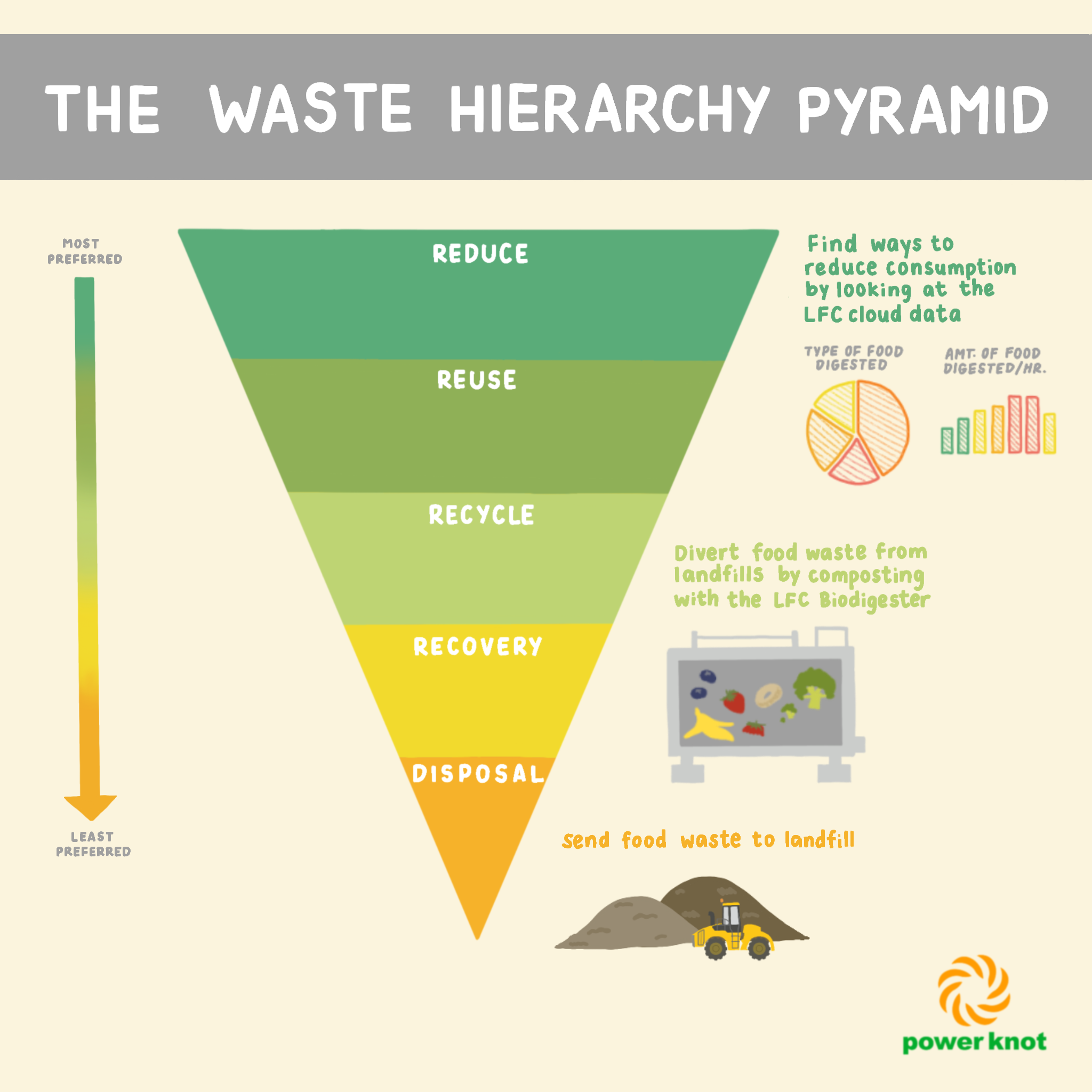
“The Food Waste Hierarchy: How to Apply …” from powerknot.com and used with no modifications.
Why We Can’t Just Dump or Burn Food Waste Anymore
Traditional ways of getting rid of food waste are coming under fire from all sides. The big three — just dumping it, burying it in a landfill, or burning it — all have major impacts on the environment, the economy, and public opinion. It’s getting harder and harder to defend them. For innovative approaches, some industries are adding value to waste streams instead.
- Open dumping creates public health hazards and contaminates soil and groundwater with leachates from decomposing organic matter.
- Landfilling generates methane — a greenhouse gas roughly 80 times more potent than CO₂ over a 20-year period — as food waste breaks down anaerobically underground.
- Incineration destroys the embedded value of the material entirely while producing emissions that require costly abatement systems to manage.
- All three methods represent a linear “take-make-dispose” model that is fundamentally incompatible with circular economy principles and UN Sustainable Development Goal targets.
The True Cost of Conventional Waste Disposal
Beyond the environmental damage, conventional disposal carries direct financial costs that compound over time. Landfill gate fees, transport logistics, regulatory compliance, and liability exposure for improper disposal all eat into margins. For large-scale food manufacturers generating thousands of tonnes of waste annually, these costs are material — and avoidable.
The Role of GHG Emissions in Climate Change
About one-third of global greenhouse gas emissions come from food systems, with food waste being a major part of that. When organic material decomposes in a landfill without oxygen, it produces methane instead of CO₂, making the disposal of food waste an especially harmful climate issue. Valorisation strategies that recover energy through controlled biochemical conversion, such as anaerobic digestion that produces renewable natural gas, capture that methane productively instead of letting it go into the atmosphere.
Not only is valorisation about preventing emissions from disposal, but it’s also about actively replacing fossil-derived fuels, chemicals, and materials with bio-based alternatives that have a much smaller carbon footprint.
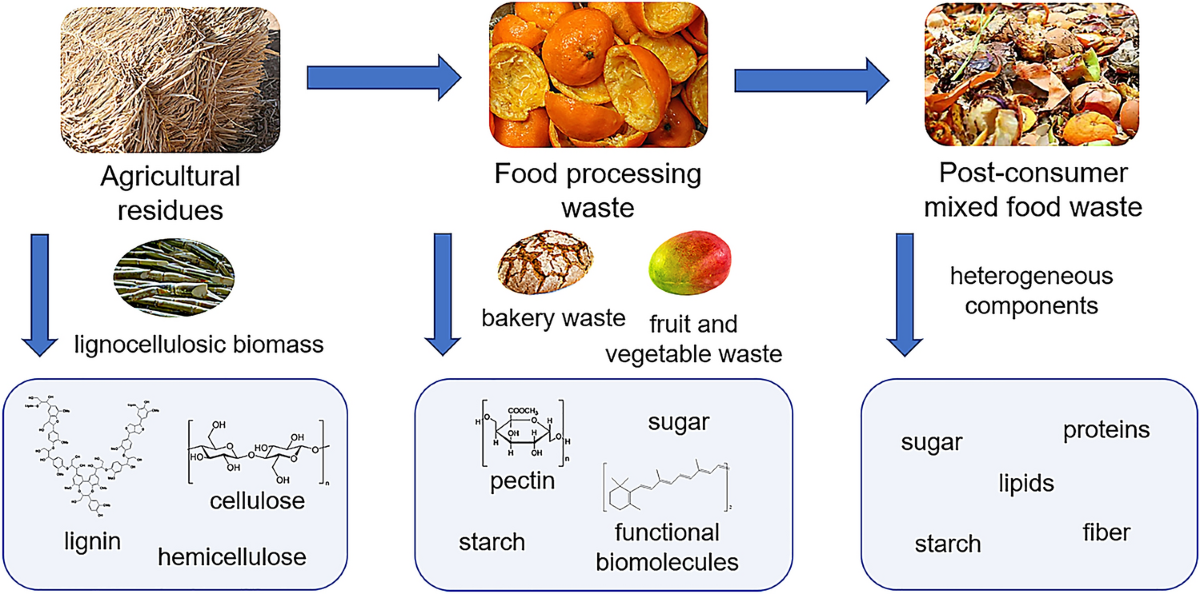
“food and agricultural wastes …” from link.springer.com and used with no modifications.
Two Essential Strategies for Every Food Business
Without a structured approach to food waste valorisation, businesses risk missing out on opportunities and wasting resources. There are two fundamental strategies that form the basis of any successful programme – and it’s crucial they’re implemented in order.
1. Get to Know Your Waste: Nutritional and Chemical Profiling
Before you can choose a valorisation pathway, you need to know what’s in your waste. You need to do a thorough chemical and nutritional characterisation of each waste stream. You need to identify the concentrations of proteins, lipids, carbohydrates, polyphenols, vitamins, and minerals in the material. You also need to quantify how much waste is generated, when it is generated, and how consistent it is. Without this data, you’re just guessing. And guessing can be costly.
2. Identifying Profitable Opportunities from Waste
After your waste has been characterized, the second strategy is to map that composition to viable valorisation pathways. A high protein content might suggest ingredient extraction for food or feed applications. A high sugar content might suggest fermentation routes to bioethanol or organic acids. Phenolic-rich peels and pomaces might suggest nutraceutical or cosmetic ingredient potential. The goal is to match the chemistry of your waste to markets that will pay for it — and then close that loop through new product development or biorefinery integration.
This is the place where the most significant innovations are taking place. It’s also where progressive food companies are already outperforming competitors who continue to pay to remove their by-products.
Upcycling: Converting By-Products Into Profit
Upcycling is the most straightforward form of valorisation — it involves converting a waste stream into a product that is of the same or even greater value than the original material. Some of the most financially successful examples come from industries that needed to solve a disposal issue and found a chance to make money in the process. For instance, innovative food waste recycling equipment has enabled businesses to transform waste into valuable resources.
Whey Protein: Transforming Cheese Waste into a Sports Nutrition Essential
Whey used to be the costliest disposal issue for the dairy industry. Around nine litres of liquid whey is produced as a by-product for every kilogram of cheese made. This volume was so massive that manufacturers historically had a hard time managing it. Nowadays, whey protein concentrate and whey protein isolate are some of the most commercially profitable ingredients in the global sports nutrition and functional food markets. They command high prices and can be found in a range of products, from protein bars to infant formula.
The industry’s shift occurred due to a focused effort on waste characterization. Whey is packed with beta-lactoglobulin, alpha-lactalbumin, immunoglobulins, and lactoferrin, all of which are bioactive proteins with well-documented functional properties. As soon as the industry understood this composition and developed the necessary extraction technologies, what was once an environmental liability turned into a multi-billion dollar ingredient category. This is the ideal model for valorisation: identify the problem, map the chemistry, and match the market.
D-Limonene: Turning Citrus Peel Waste into a High-Value Ingredient
Processing citrus fruits produces a large amount of peel waste, including orange, lemon, lime, and grapefruit peels, which are left over after the fruits are juiced. Cold-press extraction of the essential oil from these peels produces D-limonene, a naturally occurring terpene that is used in food flavouring, cosmetics, pharmaceutical excipients, and industrial cleaning products. The same peel waste also produces pectin, a gelling agent that is widely used in jams, confectionery, and pharmaceutical tablet coatings. This makes citrus peel one of the most completely valorised agricultural by-products in commercial use today.
How Leftover Brewer’s Yeast Became Marmite
Spent brewer’s yeast is the yeast slurry that remains after beer has been fermented. It is a nutrient-rich material, containing B-vitamins, glutathione, beta-glucans, and amino acids. Unilever has been using it to make Marmite, the well-known yeast extract spread, since the early 20th century. Marmite is more than just a smart product. It demonstrates that large-scale food waste valorisation has been a commercially viable strategy for over a century. The model is straightforward: a brewery’s waste becomes a food manufacturer’s main ingredient.

“Marmite – Wikipedia” from en.wikipedia.org and used with no modifications.
Food Waste: A Treasure Trove of Bioactive Compounds
Waste from all sorts of food processing contains bioactive compounds that can be sold for a high price in the nutraceutical, pharmaceutical, and cosmetic industries. There are polyphenols in grape pomace, lycopene in tomato processing waste, anthocyanins in berry skins, and curcuminoids in turmeric processing residues. All these valuable molecules can be recovered from materials that would have been composted or sent to the landfill. The question is not whether there’s value in these waste materials — there certainly is — but whether it’s cost-effective to extract them given the amounts produced. With the latest advances in supercritical CO₂ extraction, membrane filtration, and enzyme-assisted extraction, we’re getting closer to making it work.
Transforming Food Waste with Heat, Biological, and Chemical Processes
If food waste cannot be directly reused or recycled into food, feed, or functional ingredients, there are transformative technologies that offer another layer of value. These methods break down complex organic materials into simpler compounds — fuels, chemicals, materials, and gases — that can replace fossil-derived equivalents. The field is currently defined by three broad categories of conversion: heat-based, biological, and chemical, each of which is suited to different waste compositions and scale requirements. For more information on innovative solutions, explore the latest emerging technologies and innovations in the field.
The choice of conversion method is largely influenced by the moisture content, carbon-to-nitrogen ratio, and chemical composition of the waste stream being treated. Biochemical routes such as anaerobic digestion or fermentation are generally more suitable for high-moisture wastes like food processing effluents and fruit pulps. On the other hand, dry, lignocellulosic wastes — such as agricultural residues, husks, and shells — are better suited to thermochemical treatment. This understanding helps to avoid expensive mismatches between the characteristics of the waste and the processing infrastructure.
Thermochemical Conversion: Biochar, Biofuel, and Renewable Natural Gas
Thermochemical conversion is a process that uses heat, with or without oxygen, to convert organic waste into energy-rich products. The three main methods are pyrolysis, gasification, and hydrothermal liquefaction. Pyrolysis is a process that uses temperatures between 300 – 700°C to convert food waste into biochar, bio-oil, and syngas in an oxygen-free environment. Biochar is a solid, carbon-rich product that has been proven to improve soil water retention and sequester carbon for hundreds of years. Bio-oil can be refined into renewable diesel or aviation fuel. Gasification is a process that converts waste into syngas, a mixture of hydrogen and carbon monoxide, which can be used for heat, electricity, or the synthesis of renewable natural gas (RNG) that can be injected into existing gas grid infrastructure.
Enzymes, Biohydrogen, and Biodegradable Plastics: Biochemical Conversion
Microorganisms and enzymes are used in biochemical conversion to break down organic waste into target molecules under controlled conditions. The most widely used biochemical route is anaerobic digestion, which converts food waste into biogas — primarily methane and CO₂ — and a nutrient-rich digestate that can be used as fertiliser. More advanced biochemical routes are producing increasingly valuable outputs: dark fermentation of food waste generates biohydrogen, a zero-emission fuel; lactic acid fermentation produces feedstocks for polylactic acid (PLA) bioplastics; and fungal or bacterial fermentation of starchy waste streams yields industrial enzymes that are then sold back into food and detergent manufacturing. The circularity within biochemical valorisation is remarkable — waste feeds a process that produces materials used to process more food.
Biorefinery: A New Approach for Crop and Oil Industries
Biorefinery is a concept that is designed to work in a similar way to petroleum refining: it aims to process a single input into multiple outputs at the same time, maximising the value that can be extracted from every part of the input. For example, in the oilseed industry, a canola biorefinery could extract edible oil for use in food, turn the protein-rich meal into animal feed or food-grade protein isolates, recover glucosinolates for use in pharmaceuticals, and gasify the remaining lignocellulosic fraction for energy. All of this would be done from a single crop stream. This same approach could be applied to the processing of sugar beet, the manufacturing of tomato paste, and the production of olive oil. In these industries, the use of integrated biorefinery approaches has greatly improved the economics of waste management by creating multiple revenue streams from a single waste input.
Creating Bio-Based Materials and Packaging From Food Waste
One of the most promising areas of food waste valorisation is the creation of bio-based materials, specifically packaging, from agricultural and food processing waste. Chitin, which is extracted from crustacean shell waste (a by-product of the seafood processing industry), can be converted into chitosan. Chitosan is a biodegradable biopolymer with antimicrobial properties and is currently being developed for use in food packaging films, wound dressings, and water treatment applications. In a similar vein, cellulose fibres recovered from fruit and vegetable processing waste are being used to create biodegradable trays, wrapping films, and protective packaging. These materials break down in industrial compost conditions within weeks, rather than centuries.
Waste-derived packaging isn’t just about being environmentally friendly. It’s about creating a true sustainability story that resonates with consumers and retail buyers. This creates a brand differentiation opportunity that synthetic alternatives simply can’t compete with. With extended producer responsibility legislation tightening across Europe and beyond, food businesses that have already developed bio-based packaging solutions from their own waste streams will be significantly ahead of those still dependent on fossil-derived plastics.
Optimizing Valorisation through AI, Machine Learning, and IoT
Through technology, the rate of implementation and improvement of food waste valorisation strategies has increased. The use of artificial intelligence, machine learning algorithms, and Internet of Things sensor networks in food manufacturing facilities has made it possible to monitor waste generation patterns in real-time. This allows for quicker decision-making, more accurate process control, and improved matching of waste streams to valorisation pathways. Tasks that previously took weeks to complete through manual sampling and lab analysis can now be done continuously, with data being sent directly from the production line to operational dashboards.
It’s a game changer. By using machine learning to predict when waste generation will increase — whether it’s due to a specific batch of raw materials, a change in the composition of ingredients due to the season, or a lack of efficiency in the process — we can identify and address these issues before they become bigger problems. This shifts waste management from a reactive approach to a proactive one, reducing the amount of waste generated at the source and at the same time improving the consistency and quality of the by-products that are available for valorisation.
Waste Stream Analysis Powered by AI
AI-driven hyperspectral imaging systems are now capable of analysing the chemical composition of food waste streams in real time on a conveyor belt — identifying and sorting by protein content, moisture level, and contamination without any physical sampling. Companies deploying this technology can make valorisation routing decisions — this fraction to ingredient extraction, that fraction to anaerobic digestion — automatically and with a precision that manual sorting could never achieve. The result is higher-purity input streams for downstream valorisation processes, which translates directly into higher-value output products and stronger margins.
Using IoT for Immediate Waste Monitoring and Reduction
IoT sensor networks installed throughout food processing facilities are revolutionizing the way waste is monitored, measured, and addressed. Intelligent load cells on waste collection bins, optical sensors on conveyor lines, and connected flow meters on effluent discharge points all provide continuous data to centralized management platforms. This gives operations teams a clear, real-time view of exactly where waste is happening, how much is being wasted, and what the cost is. This level of detail was simply not accessible to most food businesses ten years ago, highlighting the importance of advancements in emerging technologies.
Real-World Example: IoT in a Vegetable Processing Facility
A large-scale vegetable processing operation installed an IoT-enabled waste monitoring system across its trimming and grading lines. Within the first three months, real-time data showed that a single shift change — where line speed was briefly increased to meet throughput targets — was responsible for a 34% increase in trim waste during that 45-minute window. The solution required no capital investment: a process adjustment that smoothed the line speed transition. Annually, the reduction in trim waste was worth more in recovered vegetable material — redirected to a soup ingredient supplier — than the entire cost of the IoT system installation.
Besides waste reduction at source, IoT connectivity enables dynamic routing of by-product streams. When a sensor detects that a particular batch of fruit pulp has higher-than-average sugar content, the system can automatically flag it for fermentation rather than compost — capturing biochemical conversion value that would otherwise be lost. This kind of responsive, data-driven valorisation is where the technology pays for itself repeatedly.
When AI analysis platforms are integrated with the Internet of Things (IoT), the loop is completely closed. Sensor data informs predictive models, which in turn generate operational recommendations. These recommendations are either implemented automatically or flagged for human decision-making, all within the same production cycle. For food businesses that are serious about incorporating valorisation into their operations rather than just adding it as an afterthought, this technological infrastructure is no longer a luxury. It is becoming the foundation upon which competitive, sustainable food manufacturing is increasingly being built.
The Business Case for Valorisation and its Relation to Sustainability Goals and UN SDGs
Food waste valorisation is a key part of the United Nations Sustainable Development Goals, particularly SDG 12 (Responsible Consumption and Production). This goal includes a specific target to reduce per capita global food waste by half at the retail and consumer levels by 2030 and to decrease food losses along the production and supply chains. But the ties go even further: valorisation also contributes to SDG 7 (Affordable and Clean Energy) through the recovery of bioenergy, SDG 13 (Climate Action) through the displacement of greenhouse gases, and SDG 9 (Industry, Innovation, and Infrastructure) through the creation of circular bioeconomy systems.
For food businesses, the sustainability reporting landscape is becoming increasingly complex. This is due to the EU’s Corporate Sustainability Reporting Directive and the increasing pressure from institutional investors who are applying ESG scoring frameworks. Valorisation strategies provide measurable impact data that can help businesses navigate this complexity. The metrics provided by these strategies, such as tonnes of waste diverted from landfill, kilograms of CO₂ equivalent avoided, and litres of renewable energy produced, are exactly what sustainability reports and investor disclosures need. Conventional waste disposal methods simply cannot generate these types of concrete metrics.
How Valorisation Backs Up Corporate Sustainability Claims
Unsubstantiated sustainability claims are becoming a major liability. Accusations of greenwashing, regulatory scrutiny from the EU’s Green Claims Directive, and increasingly sceptical consumers mean that food businesses need strong, verifiable data behind every environmental statement they make. Valorisation strategies, by their nature, produce exactly this kind of verifiable evidence. When you can show that a specific volume of citrus peel waste was turned into a defined quantity of pectin and D-limonene — displacing virgin petrochemical equivalents — the sustainability claim writes itself, and it stands up to scrutiny.
There’s also a competitive aspect to this. Retailers, especially in Europe, are actively looking for suppliers who can prove they operate within a circular economy. If you can show you’re taking a closed-loop approach to waste, where by-products are consistently valorised instead of thrown away, you’re more likely to be chosen as a supplier. This isn’t something that might happen in the future, it’s happening right now for food businesses operating on a large scale in markets where sustainability is important.
The most advanced food companies are now incorporating valorisation KPIs directly into their operational performance dashboards. They are treating revenue derived from waste, by-product diversion rates, and emissions avoided through valorisation as key business metrics, along with traditional measures like yield efficiency and energy consumption. This integration indicates a basic shift: from viewing valorisation as a sustainability initiative to viewing it as a core operational discipline. For instance, some companies are leveraging food waste depackaging systems to enhance their valorisation efforts.
Creating New Products and Expanding Your Business
One of the most overlooked aspects of food waste valorisation is its potential to create entirely new products and sources of income that go far beyond a company’s main business. A juice manufacturer that extracts polyphenols from apple pomace is no longer just a beverage company — it becomes a supplier of ingredients to the nutraceutical industry. A potato processor that turns starch-rich processing water into bioplastic feedstock is not only reducing disposal costs but also breaking into the materials market. These opportunities for expansion are real, proven, and increasingly accessible as extraction and conversion technologies become more affordable at smaller scales.
Valorisation-driven product development also tends to be more commercially sustainable, because the raw material — the waste stream — is exclusive to the manufacturer. Unlike traditional ingredient sourcing, where price and availability are subject to market forces, an ingredient sourced from your own valorisation process gives you predictable costs, secure supply, and a unique provenance story that competitors can’t easily copy. This combination of economic advantage and narrative differentiation is rare in food manufacturing, and valorisation delivers it systematically.
Food Waste Valorisation Is Not Just a Future Concept — It’s a Current Responsibility
The proof is clear: food waste valorisation is not just an emerging concept being tested in research labs. It is a fully developed, commercially viable, and strategically crucial field that top food companies around the world are already implementing on a large scale. The technologies are available. The markets for valorised products are there. The regulatory push to act is there. The difference between the companies seizing this opportunity and those still paying to get rid of their by-products is not access to innovation — it is the decision to start.
When you’re developing your strategy, it’s important to keep the valorisation hierarchy in mind. Not all pathways are created equal, and the aim should always be to extract the maximum value from each waste fraction before resorting to a less valuable option:
- Start with prevention — minimize waste production at the source by optimizing processes and forecasting demand.
- Direct recycling — redirect edible or nearly edible waste to human food applications, maximizing nutritional and economic value.
- Extraction of ingredients and bioactives — recover high-value compounds such as proteins, polyphenols, enzymes, and fibers for use in food, nutraceuticals, or pharmaceuticals.
- Animal feed — transform non-extractable food-grade material into certified feed ingredients, replacing virgin agricultural inputs.
- Biochemical conversion — ferment or digest residual organic fractions into biofuels, biogas, organic acids, or bioplastic precursors.
- Thermochemical conversion — apply pyrolysis or gasification to dry, non-fermentable residues to recover energy and biochar.
- Only use disposal as a last resort — and only for fractions where no valorisation pathway is technically or economically feasible.
Every fraction of food waste has an optimal use destination. The role of a valorisation strategy is to identify it, create the pathway to it, and execute consistently. Companies that do this well not only reduce their environmental footprint — they build genuinely more resilient, profitable, and future-ready operations. This is not a sustainability argument. This is a business argument. And currently, they are the same argument. For more insights on managing food waste, explore food waste management strategies.
If you found this article useful, you may also like to read:
Food Waste Valorisation Depackaging Equipment: Extracting Value from Organic Waste
Commonly Asked Questions
The following questions and answers clarify the most frequent misunderstandings about food waste valorisation. They provide clear definitions and practical initial steps for food businesses at any stage of their valorisation process.
What is the meaning of food waste valorisation and how is it different from recycling?
Food waste valorisation refers to the conversion of food loss and waste into products of higher or similar value, such as food ingredients, bioactive compounds, biofuels, bioplastics, fertilisers, and packaging materials. It is not the same as recycling, which usually involves returning a material to its original state – for example, glass to glass, paper to paper. Valorisation, on the other hand, aims to extract the highest possible economic and functional value from a waste stream, often transforming it into something more valuable than the original material. For more insights, you can explore what depackaging is and why it is important.
Composting is a method of returning organic matter to the soil as a basic nutrient source. Valorisation, on the other hand, extracts polyphenols, fibres, and bioactive compounds from the same material for high-value applications before composting or digesting the leftovers. Essentially, this is the application of circular economy principles to food systems at their most advanced level.
What types of food production businesses can benefit most from valorization strategies?
Industries that produce large, consistent, and chemically rich waste streams generally have the most potential for valorization. Dairy processing (whey, permeate, cream), citrus juicing (peel, pulp, seed), brewing and distilling (spent grain, yeast, stillage), tomato processing (skin, seeds, pulp), oilseed crushing (meal, lecithin, wax), and seafood processing (shells, frames, offcuts) all produce by-products that have well-documented valorization pathways and established commercial markets for their products. However, even smaller processors in sectors like bakery, ready meals, and fresh produce can benefit from valorization — especially through collaborative models where multiple producers combine their waste streams to achieve the volumes required for economically viable conversion. For example, food waste depackaging systems can be utilized to enhance the valorization process.
Which bioactive compounds in food waste are the most commercially viable?
Commercial viability is determined by the concentration of the compound in the waste stream, the cost and complexity of extraction, and the size of the market willing to pay for the purified output. Based on these criteria, the most consistently viable bioactive compounds recovered from food waste include: lycopene from tomato processing residues; polyphenols and resveratrol from grape pomace and wine lees; pectin from citrus peel and apple pomace; beta-glucan from oat and barley bran; astaxanthin from crustacean shell waste; and curcuminoids from turmeric processing residues.
Enzyme recovery is growing in commercial importance. Proteases, amylases, and lipases that are recovered from fermentation waste streams and slaughterhouse by-products are used widely in food processing, detergent manufacturing, and pharmaceutical production. As the costs of extraction technology continue to decrease, the threshold of commercial viability is expanding to include compounds that were previously too dilute or too complex to recover economically.
What role does food waste valorisation play in reducing greenhouse gas emissions?
Valorisation reduces greenhouse gas emissions in two ways. First, it diverts organic waste from landfill and incineration — both of which generate significant direct emissions, especially methane from the anaerobic decomposition of food waste in landfill conditions. Second, it displaces the production of virgin materials — fossil fuels, synthetic chemicals, petroleum-based plastics, and conventionally produced fertilisers — each of which carries a substantial carbon footprint in its own production. When a valorised biofuel replaces diesel, or a bio-based packaging film replaces polyethylene, the emissions benefit is real and measurable. Life cycle assessment methodologies exist to quantify these avoided emissions precisely, and they are increasingly used to substantiate corporate climate commitments and product-level environmental claims.
What should a food business do first when developing a valorisation strategy?
Begin with a thorough waste audit. Prior to choosing any conversion technology or pursuing any commercial route, it’s crucial to know exactly what waste your facility produces — how much, where in the process, what chemical and physical traits it has, and how consistent it is over time. This characterisation work may not be exciting, but it’s an essential starting point. Without it, valorisation investments are based on guesses rather than facts, and guesses can be costly.
After you’ve identified the waste, you can begin to sort each stream according to established valorisation methods. Begin with the most valuable options, such as direct food upcycling and bioactive compound extraction, and then move down the value hierarchy. It’s important to involve ingredient purchasers, biorefinery operators, and technology suppliers early on in this process. The market knowledge you acquire will be just as valuable as the technical data from your waste audit.
Think about teaming up. A lot of food companies — especially small and medium-sized businesses — don’t produce enough of any one type of waste to make it worthwhile to invest in dedicated extraction or conversion infrastructure. But if several producers pool their different types of waste and share the processing infrastructure, they can create value from waste in ways that wouldn’t be cost-effective for any one business to do on its own. Trade groups, local food networks, and innovation networks are good places to look for potential partners.
From the outset, establish tangible goals and incorporate valorisation performance into your operational KPIs. Monitoring revenue from waste, by-product diversion rates, and reductions in disposal costs ensures the programme’s accountability and gradually presents the business case to leadership and investors.
In conclusion, valorisation should be seen as a never-ending process of improvement rather than a one-and-done project. Waste streams change as products and processes evolve; markets for valorised outputs develop and mature; new conversion technologies become accessible. The businesses that sustain valorisation success are those that build it into the organisational culture — making it a permanent feature of how they think about raw materials, process design, and product innovation, rather than a project that gets completed and filed away. If you’re looking for expert guidance on sustainable approaches to resource recovery and circular food systems, exploring what specialists in this space offer is a worthwhile next step.
Discover more from IPPTS Depackaging Equipment Insights
Subscribe to get the latest posts sent to your email.